
New chapter!
- Principle of Superposition
- Interference
- Path difference
Here we go:
What is superposition?
Multiple waves passing through the same point.
What is interference?
The phenomena that occurs when waves superpose – it is described through the principle of superposition.
What is the principle of superposition?
“When multiple waves pass through a point, the resultant displacement at that point is equal to the sum of the displacements of individual waves at that point.”
Example: 2 Individual Waves Interfering
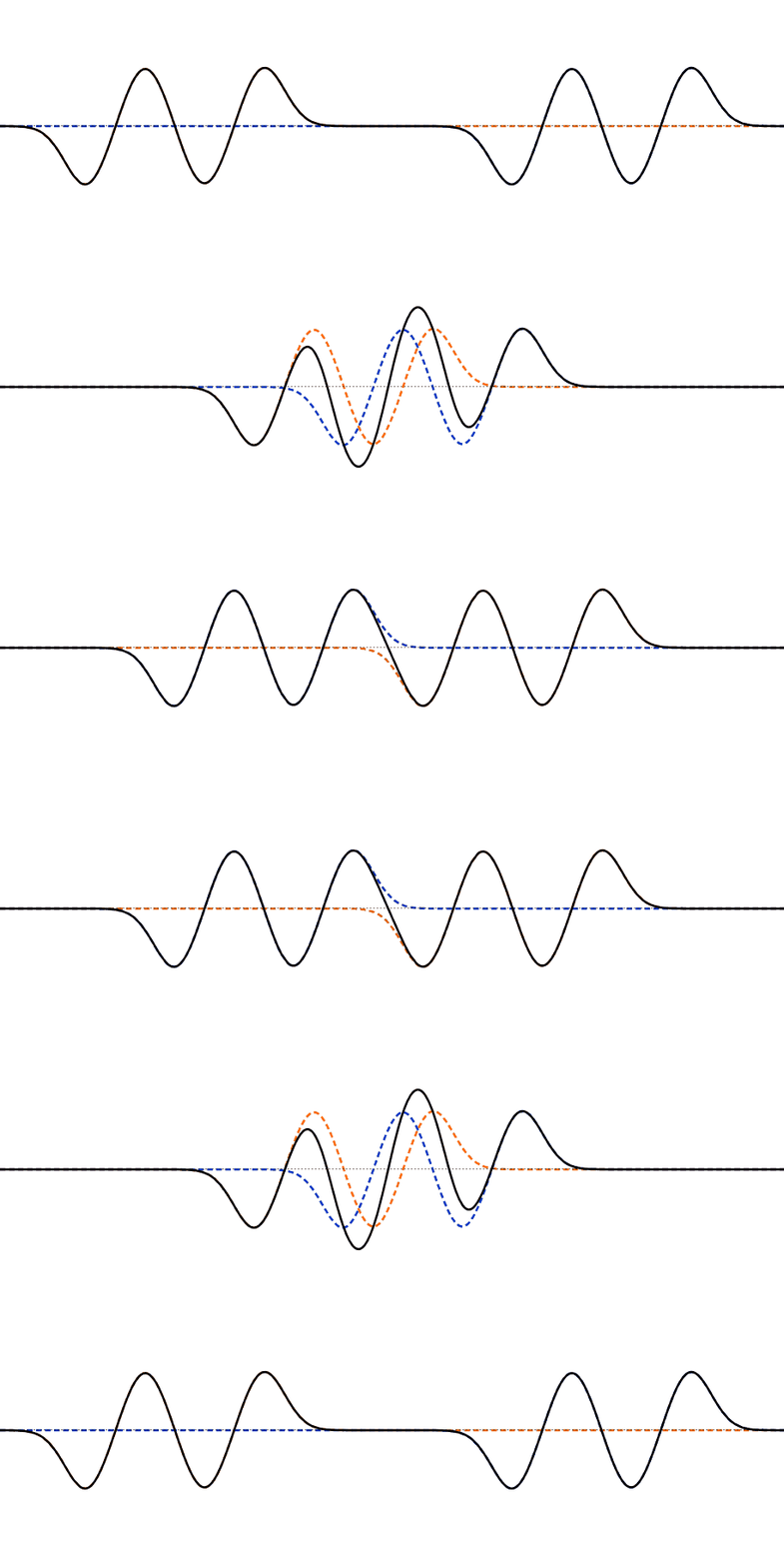
There are 2 Types of Interference:
Constructive Interference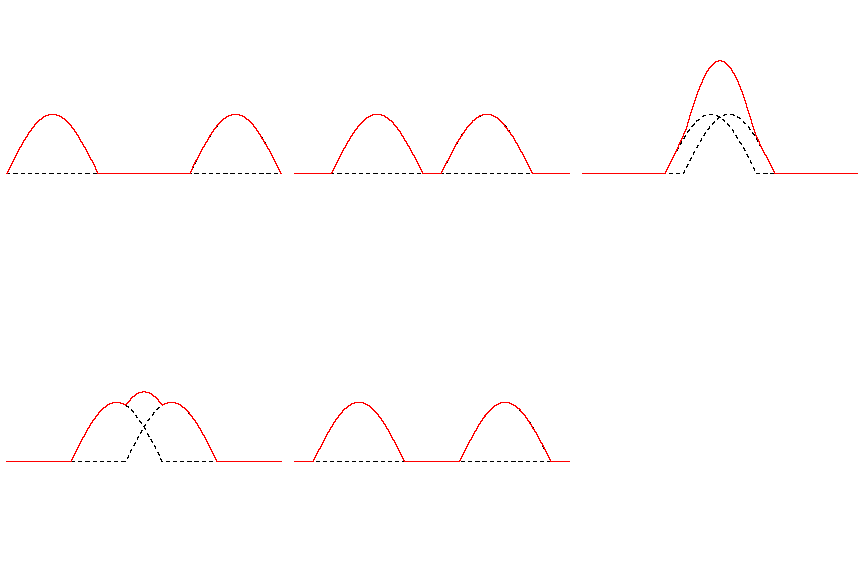 | Crest + Crest OR Trough + Trough Displacements ADD UP to have a larger value Maximum displacement |
Destructive Interference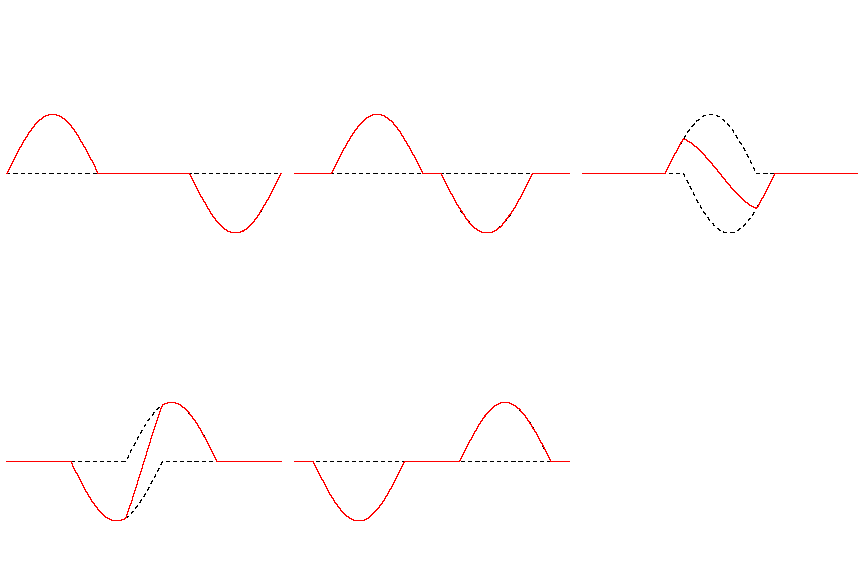 | Crest + Trough Displacements CANCEL OUT to have smaller value For identical waves, 0 displacement |
However, interference can happen between ANY waves as long as they are in the same medium.
Waves with different frequencies, amplitudes, or phase can interfere – the principle of superposition will be true: the resultant displacement = sum of individual displacements.
A Classic Example: 2 Wave Sources
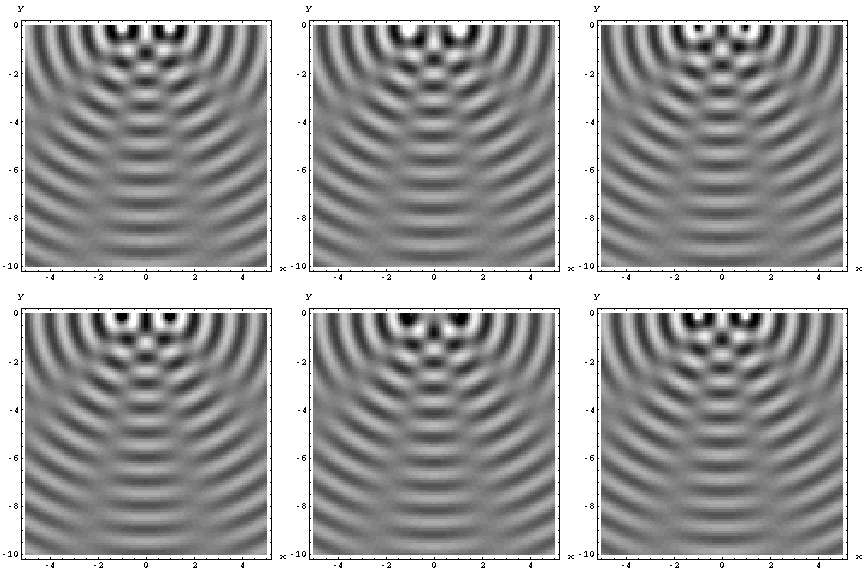
When two point sources emit waves radially, the waves can interfere & form alternating patterns. This is due to path difference.
What is a path difference?
The difference in length travelled by 2 waves across a path from a SOURCE to a POINT where they superpose.

| When path difference is a WHOLE multiple of λ: | Maximum constructive interference |
| When path difference is an ODD multiple of λ/2: | Maximum destructive interference (antiphase) |
| Otherwise: | A combination |
Now that you know the basics of interference & superposition, we can branch off into a few other sections:
⇐ Previous in Physics: Electromagnetic Spectrum
⇒ Next in Physics: Stationary Waves
 ProDuckThieves
Pingback: 15. Superposition – ProDuckThieves